Think about the last time you cleaned your outdoor trash cans. If you're like most Maryland homeowners, it's probably been a while - or maybe never. After all, they're just containers for garbage, right? What's the point of cleaning something that's just going to get dirty again?
The truth is, your trash cans are among the most contaminated items on your property, harboring dangerous bacteria, attracting pests, and creating health hazards that can affect your entire family. In this article, we'll explore exactly what's growing in your garbage bins and why regular trash can cleaning should be a priority for every household.
What's Really Living in Your Trash Can?
Your outdoor garbage bins create the perfect environment for harmful microorganisms. The combination of organic waste, moisture, darkness, and warmth produces a bacterial breeding ground that would concern any health professional.
Research has shown that trash cans contain more bacteria than many toilet seats. Studies have identified numerous dangerous pathogens commonly present in household garbage bins, including:
These bacteria don't stay contained in your trash can. Every time you lift the lid, touch the handle, or wheel the bin to the curb, you're potentially coming into contact with these pathogens. Your hands then transfer them to door handles, railings, and anything else you touch - creating a path directly into your home.
Health Risks You May Not Realize
The health implications of dirty trash cans extend far beyond the "gross factor." Here are the real risks your family faces:
Respiratory Issues
As organic waste decomposes, it releases gases and microscopic particles into the air. Opening a contaminated trash can releases a cloud of bacteria-laden particles that you inhale. For family members with asthma, allergies, or compromised immune systems, this exposure can trigger serious respiratory problems.
Gastrointestinal Illness
The bacteria present in dirty trash cans are the same ones that cause food poisoning. When these pathogens transfer from your trash can to your hands, and then to food or your mouth, the result can be severe stomach illness. Children are particularly vulnerable as they often touch many surfaces and then put their hands in their mouths.
Skin Infections
Direct contact with contaminated surfaces can lead to skin infections, especially if you have cuts or scrapes on your hands. Staphylococcus bacteria, commonly found in trash cans, can cause painful boils and infections that may require medical treatment.
Vulnerable Family Members at Higher Risk
Children, elderly family members, pregnant women, and anyone with a weakened immune system face elevated risks from trash can contamination. For these individuals, what might cause mild discomfort in a healthy adult could lead to serious illness.
The Pest Problem: Unwanted Guests
Dirty trash cans don't just harbor bacteria - they're an open invitation to pests that bring their own set of health hazards.
Flies and Maggots
Flies are attracted to the smell of decomposing organic matter. A single fly can carry over one million bacteria on its body. When flies land on your trash can and then on other surfaces around your home, they spread disease-causing pathogens everywhere they go. Left uncleaned, trash cans become breeding grounds where flies lay eggs that hatch into maggots within 24 hours.
Rodents
Mice and rats are drawn to the food residue in garbage bins. Once rodents establish your property as a food source, they're difficult to eliminate. Beyond the property damage they cause, rodents carry diseases including hantavirus, leptospirosis, and salmonellosis. Their droppings and urine can contaminate areas well beyond your trash cans.
Raccoons and Other Wildlife
In Maryland, raccoons, opossums, and other wildlife frequently raid unsecured trash cans. These animals can carry rabies and other diseases. Encounters with cornered wildlife can be dangerous for family members and pets.
Insects
Beyond flies, dirty trash cans attract cockroaches, ants, wasps, and other insects. Cockroaches in particular are known asthma triggers and can spread bacteria throughout your property.
The Odor Factor: More Than Just Unpleasant
The smell emanating from dirty trash cans isn't just offensive - it's a warning sign. That odor comes from the decomposition of organic materials and the gases released by bacterial colonies. The stronger the smell, the more contaminated your bin has become.
These odors can:
- Travel into your home, especially in warm weather
- Make outdoor spaces unenjoyable
- Attract more pests from greater distances
- Create tension with neighbors
- Lower your enjoyment of your outdoor living areas
Simply taking out the trash doesn't eliminate the source of these odors. The residue left behind continues to decompose and smell, often getting worse over time as layers of contamination build up.
Why Regular Cleaning Matters
Just like you wouldn't use the same dinner plates for months without washing them, your trash cans need regular cleaning to remain sanitary. Here's why consistency matters:
Bacteria Multiply Rapidly
Under the right conditions, bacteria can double their population every 20 minutes. What starts as minor contamination can become a serious health hazard within days. Regular cleaning breaks this cycle and prevents bacterial colonies from becoming established.
Residue Builds Up
Each time your trash can is emptied, some residue remains - liquid from food packaging, condensation, and particles that fall from bags. Over weeks and months, this residue hardens and becomes increasingly difficult to remove, while continuously feeding bacterial growth.
Seasonal Considerations in Maryland
Maryland's climate makes trash can cleaning particularly important. During hot, humid summers, bacterial growth accelerates dramatically. A trash can that might stay relatively manageable in winter becomes a hazardous environment in July and August when temperatures inside the bin can exceed 100 degrees.
DIY vs Professional Trash Can Cleaning
You might be thinking, "I'll just hose out my trash can myself." While this is better than nothing, there are significant limitations to DIY cleaning:
What a Garden Hose Can't Do
- Kill Bacteria: Cold water from a hose doesn't kill bacteria - it just moves them around. Many pathogens require specific temperatures or sanitizing agents to destroy.
- Remove Hardened Residue: Dried organic matter adheres strongly to plastic and often requires high-pressure hot water and specialized cleaning agents to remove completely.
- Sanitize: True sanitization requires hospital-grade disinfectants applied at proper concentrations and contact times.
- Deodorize: Odor-causing bacteria may survive basic cleaning, meaning the smell returns quickly.
Professional Trash Can Cleaning Advantages
Our professional trash can cleaning service addresses these limitations through:
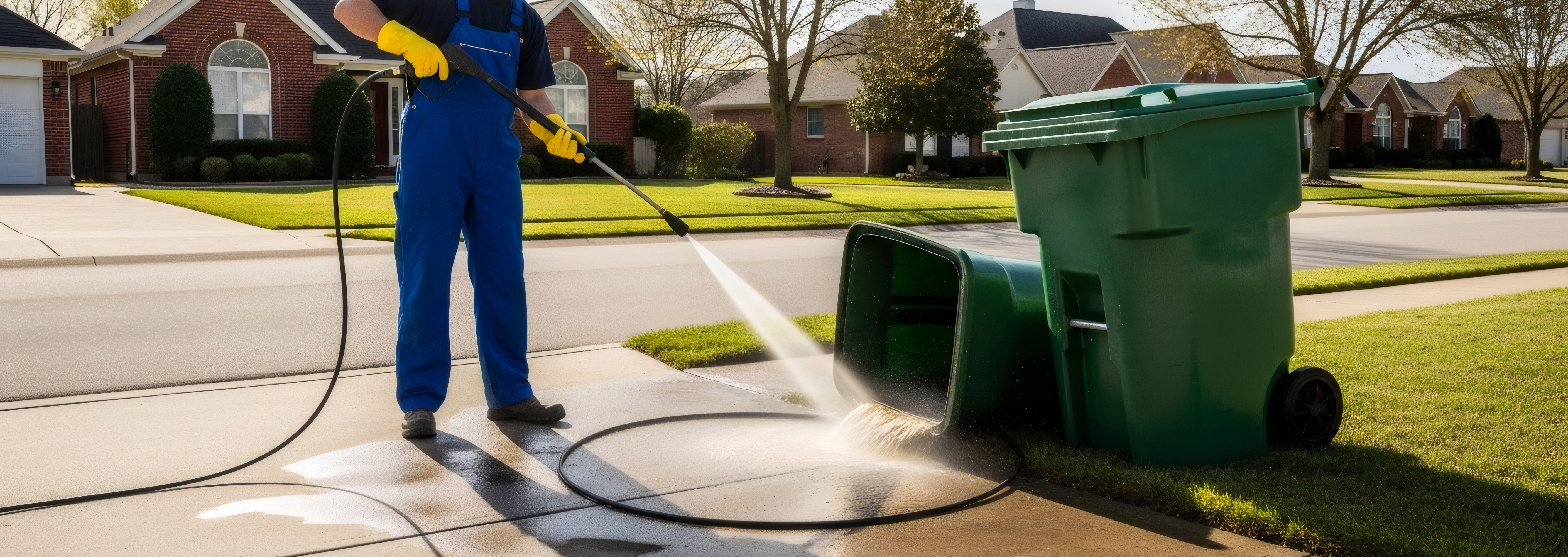
- High-Pressure Hot Water: Water heated to over 200 degrees Fahrenheit effectively kills bacteria and loosens even stubborn, dried-on residue.
- Hospital-Grade Sanitizers: We use EPA-registered disinfectants that eliminate 99.9% of bacteria, viruses, and other pathogens.
- Complete Coverage: Our specialized equipment cleans the entire interior and exterior of your bins, including lids, handles, and wheels.
- Proper Drainage: Professional cleaning includes proper water capture and disposal, preventing contaminated runoff from affecting your property.
- Deodorization: Enzyme-based deodorizers break down odor-causing compounds at the molecular level for long-lasting freshness.
Recommended Cleaning Frequency
For optimal health and sanitation, we recommend professional trash can cleaning on the following schedule:
- Monthly: Ideal for households with young children, elderly residents, or anyone with health concerns. Also recommended during summer months.
- Bi-Monthly: Suitable for most Maryland households, providing consistent protection year-round.
- Quarterly: Minimum recommended frequency for basic sanitation, though more frequent cleaning is better.
Consider more frequent cleaning if you notice any of these warning signs:
- Persistent odors even after trash pickup
- Visible residue or liquid in the bottom of bins
- Flies or other insects around your trash cans
- Evidence of rodent activity
- Sticky or grimy lid and handles
Protecting Your Family's Health
Your trash cans might be out of sight most of the time, but the health hazards they pose shouldn't be out of mind. Regular professional cleaning is a simple, affordable step that protects your family from preventable illness, keeps pests away from your property, and eliminates offensive odors that diminish your outdoor enjoyment.
As awareness grows about the importance of sanitation in our daily environments, trash can cleaning is becoming standard practice for health-conscious Maryland families. Don't let your garbage bins become the weak link in your household hygiene.
Ready for Fresh, Sanitized Trash Cans?
Dean's BlueWave Services offers professional trash can cleaning throughout Maryland. Our hot water sanitization process eliminates 99.9% of bacteria, removes odors, and keeps pests away.
Schedule Cleaning Call: 667-435-1130