Your concrete surfaces represent a significant investment. A professionally installed driveway can cost $5,000 to $15,000 or more, while patios, walkways, and pool decks add thousands more. With proper care, concrete can last 30-50 years or longer. Without it, you may face expensive repairs or replacement in just 10-15 years.
The good news is that extending concrete life does not require complicated procedures or expensive treatments. Regular cleaning, appropriate sealing, and basic preventive maintenance can add decades to your surfaces while keeping them looking great. Here is everything Maryland homeowners need to know about protecting their concrete investment.
How Cleaning Prevents Concrete Deterioration
Regular cleaning is the single most important thing you can do for your concrete. This is not just about aesthetics - cleaning directly prevents deterioration through several mechanisms:
Removing Moisture-Trapping Debris
Leaves, dirt, and organic matter that accumulate on concrete trap moisture against the surface. In Maryland's freeze-thaw climate, this moisture penetrates the concrete, freezes, expands, and causes cracking and spalling. Each freeze-thaw cycle does a little more damage, gradually breaking down the surface.
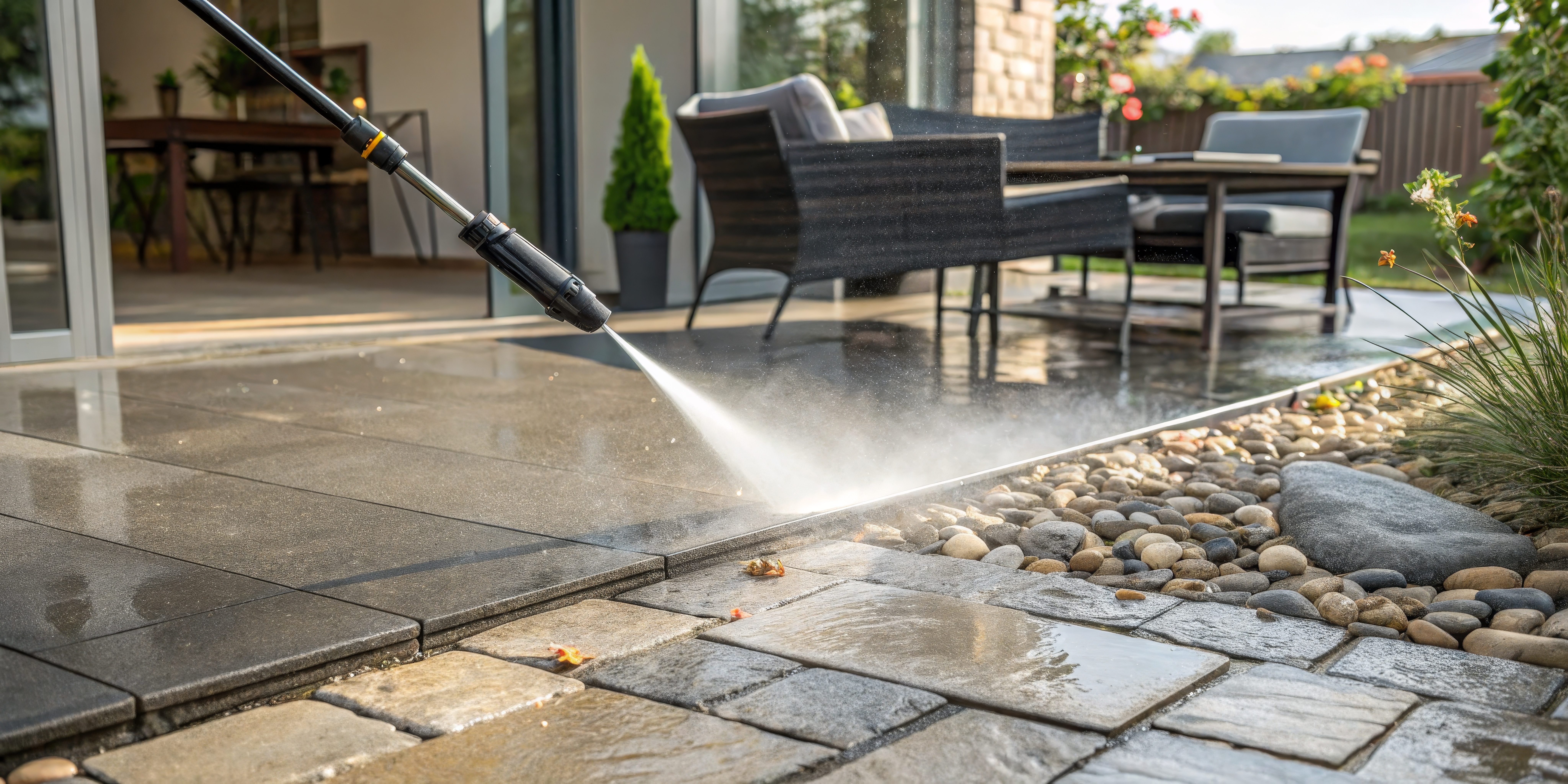
Regular cleaning removes this debris before it can trap damaging moisture. Our driveway cleaning and patio cleaning services help Maryland homeowners prevent this common form of deterioration.
Eliminating Biological Growth
Algae, moss, and mold do more than make concrete look dirty - they actively damage it. These organisms produce acids as metabolic byproducts that slowly dissolve cement. Their root structures penetrate the porous surface, creating tiny cracks that allow water infiltration. Over time, biological growth literally eats away at your concrete.
Professional cleaning kills biological growth and removes it completely, stopping this damage in its tracks. Learn more about biological damage in our article on how algae and mold damage your home.
Preventing Stain Penetration
Oil, rust, and other staining agents do not just discolor concrete - they can cause chemical reactions that weaken the surface. The longer stains sit, the deeper they penetrate and the more damage they cause. Prompt cleaning prevents surface stains from becoming structural problems.
Maintaining Surface Texture
Concrete surfaces typically have a textured finish for traction and appearance. Accumulated grime, embedded dirt, and biological growth fill these textures, reducing traction and changing the surface characteristics. Professional cleaning restores the original texture, maintaining both safety and appearance.
The Importance of Sealing After Cleaning
Concrete is naturally porous - water, oil, and other substances can penetrate the surface and cause damage. Sealing creates a protective barrier that significantly extends concrete life. Here is what you need to know about concrete sealers:
Types of Concrete Sealers
Penetrating Sealers: These absorb into the concrete and provide protection from within. They do not change the appearance of concrete and allow it to breathe while repelling water and deicing salts. Penetrating sealers are ideal for driveways and areas that see vehicle traffic.
Topical Sealers: These create a protective film on the surface. They can add a gloss or wet look and provide excellent protection against staining. Topical sealers work well for patios, decorative concrete, and areas where appearance is a priority.
Acrylic Sealers: A common topical option that provides good protection and enhances color. Acrylic sealers are affordable and easy to apply but may need reapplication every 1-3 years.
Epoxy and Polyurethane Sealers: High-performance options that provide superior protection and durability. More expensive than acrylics but last longer and withstand heavier use.
When to Seal Concrete
New concrete should be sealed once it has fully cured, typically 28-30 days after pouring. Existing concrete should be sealed after thorough cleaning to ensure the sealer bonds properly with the surface.
The best time to seal in Maryland is late spring through early fall when temperatures are between 50-90 degrees Fahrenheit. Sealer needs time to cure before exposure to rain or heavy use.
How Often to Reseal
Resealing frequency depends on sealer type, traffic levels, and environmental exposure:
- High-traffic driveways: Every 1-2 years
- Moderate-use patios: Every 2-3 years
- Light-use walkways: Every 3-5 years
Signs it is time to reseal include water no longer beading on the surface, fading or discoloration, and stains penetrating more easily.
Crack Prevention and Early Intervention
Cracks are concrete's biggest enemy. Once they start, they allow water infiltration that accelerates deterioration. Prevention and early repair are essential:
Understanding Why Concrete Cracks
Shrinkage Cracks: Concrete shrinks slightly as it cures and dries. Properly placed control joints direct this shrinkage into planned locations, but sometimes cracks appear elsewhere.
Settlement Cracks: When the soil beneath concrete shifts or compacts, the slab can crack. Poor soil preparation during installation is often the cause.
Freeze-Thaw Damage: Water that penetrates concrete expands when it freezes, creating internal pressure that causes cracking. This is a major concern in Maryland's climate.
Overloading: Concrete has weight limits. Excessive loads from heavy vehicles or equipment can cause cracking.
Tree Roots: Growing roots beneath concrete push upward, causing cracks and heaving. This is common in Maryland's tree-lined neighborhoods.
Preventing Cracks
- Keep surfaces clean and sealed to prevent water infiltration
- Maintain proper drainage so water flows away from concrete
- Fill existing control joints with flexible sealant to prevent water entry
- Address drainage issues that cause soil erosion beneath slabs
- Consider root barriers if large trees are near concrete
Repairing Cracks Promptly
Small cracks should be repaired before they become big problems. Hairline cracks can be filled with concrete crack filler available at hardware stores. Larger cracks may need professional repair with specialized products.
The key is acting quickly. A small crack that costs $20 to fill can become a major repair costing hundreds or thousands if left untreated.
Professional Cleaning is the Foundation
Proper concrete maintenance starts with professional cleaning. Dean's BlueWave Services removes years of buildup and prepares your surfaces for sealing, maximizing protection and longevity.
Book Your Cleaning Call: 667-435-1130Annual Maintenance Schedule for Maryland Homeowners
Developing a consistent maintenance schedule ensures your concrete receives proper care throughout the year. Here is what we recommend for Maryland conditions:
Spring (March-May)
- Inspect all concrete surfaces for winter damage, new cracks, or heaving
- Clean debris accumulated over winter
- Schedule professional pressure washing to remove dirt, salt residue, and biological growth
- Repair any cracks that developed over winter
- Apply or reapply sealer if needed
Summer (June-August)
- Regular sweeping to remove debris
- Prompt cleanup of oil drips, food spills, and other staining agents
- Monitor for algae growth in shaded areas
- Keep plants trimmed back from concrete edges
Fall (September-November)
- Remove fallen leaves promptly to prevent staining and moisture trapping
- Clear debris from expansion joints and control joints
- Consider a second professional cleaning to remove summer buildup before winter
- Inspect sealer condition and reapply if water no longer beads
- Repair any cracks before freeze-thaw season
Winter (December-February)
- Use deicing products sparingly - excess salt damages concrete
- Avoid ammonium-based deicers which are particularly harmful
- Consider calcium chloride or magnesium chloride as gentler alternatives
- Shovel snow promptly to reduce moisture exposure
- Avoid using metal shovels or snow blowers that can gouge the surface
Quick Monthly Maintenance Checklist
- Sweep surfaces to remove debris
- Check for and clean any oil or fluid spots
- Inspect for new cracks or damage
- Remove any organic growth you notice starting
- Ensure drainage is working properly
- Clear debris from control joints
Special Considerations for Different Concrete Surfaces
Driveways
Driveways face the toughest conditions - vehicle weight, oil drips, and heavy salt exposure in winter. They benefit from:
- Annual professional cleaning
- Penetrating sealer for maximum protection
- Prompt oil stain treatment
- Careful deicing product selection
Learn more in our article on the benefits of professional driveway cleaning.
Patios
Patios may see less vehicle traffic but face food and beverage spills, furniture scratches, and heavy foot traffic. Priority maintenance includes:
- Using furniture pads to prevent scratching
- Cleaning up spills promptly
- Annual or bi-annual professional cleaning
- Topical sealer for enhanced appearance
Sidewalks and Walkways
Walkways need attention to safety and often fall in shaded areas prone to biological growth. Focus on:
- Keeping surfaces clear of slippery algae
- Repairing trip hazards promptly
- Maintaining proper drainage along edges
- Regular cleaning to maintain traction
See our complete guide to sidewalk cleaning for more details.
Pool Decks
Pool decks face constant moisture exposure and chemical contact from pool water. They require:
- More frequent cleaning due to moisture
- Sealer that can handle pool chemical exposure
- Special attention to slip resistance
- Regular inspection for cracks that could allow water infiltration
When Repair or Replacement Becomes Necessary
Even with excellent maintenance, concrete eventually reaches the end of its useful life. Here are signs that repair or replacement may be needed:
Signs Professional Repair is Needed
- Cracks wider than 1/4 inch
- Multiple intersecting cracks
- Significant spalling or surface deterioration
- Sections that have heaved or settled noticeably
- Large areas of discoloration that do not clean up
Signs Replacement May Be Necessary
- Extensive cracking throughout the slab
- Major heaving or settlement
- Crumbling or deteriorating concrete
- Damage affecting more than 25-30% of the surface
- Structural issues from soil movement
Often, proper maintenance can delay replacement significantly. Surfaces that might have needed replacement in 15-20 years can last 30-40 years with good care.
The Cost-Benefit of Concrete Maintenance
Some homeowners wonder if concrete maintenance is worth the investment. Consider these numbers:
- Professional cleaning: $150-400 annually for typical driveway and patio
- Sealing: $200-500 every 2-3 years
- Minor crack repair: $50-200 as needed
- Total annual maintenance cost: $200-400
Compare this to replacement costs:
- Driveway replacement: $5,000-15,000+
- Patio replacement: $3,000-10,000+
- Sidewalk replacement: $1,000-5,000+
If proper maintenance extends concrete life from 15 years to 35 years, you have saved $10,000-30,000 in replacement costs while spending perhaps $8,000-14,000 on maintenance over that period. That is a significant net savings, plus you enjoy better-looking surfaces throughout.
Getting Started with Proper Maintenance
If your concrete has not received regular professional cleaning, now is the time to start. The first step is a thorough cleaning to remove years of accumulated grime, biological growth, and embedded dirt. Once surfaces are clean, you can assess their condition and determine if sealing or repairs are needed.
At Dean's BlueWave Services, we provide comprehensive concrete cleaning for driveways, patios, sidewalks, and other concrete surfaces throughout Maryland. Our professional cleaning prepares your concrete for sealing and sets the foundation for a proper maintenance program.
Contact us for a free assessment of your concrete surfaces. We will evaluate their current condition, recommend appropriate cleaning and maintenance approaches, and help you develop a plan to maximize their lifespan and protect your investment.